
Hack a WiFi network: 3 effective techniques
WiFi is a technology that allows having a wireless Internet connection through a hotspot that serves as a relay point between the access provider and the user.
It is a technology whose use has spread today. In almost all places of the city, whether at home, in transports or in our workplace passing by supermarkets, the WiFi connection is acclaimed.
This article will also interest you: How to hack a WiFi network?
However, if certain networks remain open to the general public, it remains no less that others have their access protected by passwords. So the idea came like that of finding the tricks to hack these WiFi networks and enjoy the Internet they offer
In a practical way, is this possible?
Yes, indeed it is possible to hack a WiFi network and enjoy its Internet access. For this, it will be necessary to find a way to discover the login identifiers used by the owners of this WiFi network to protect this access. Most often these are very long passwords composed of several characters.
Normally one wonders how to go about it?
There exist several techniques adapted to this kind of hacking. Techniques that can be carried out by hacking specialists or even by beginners who simply want to connect to the internet for free. There is the possibility of using already preconceived software or even going through composition settings of a particular algorithm.
However, we must warn you. Computer hacking is contrary to the law. Therefore all the people who are guilty of it are liable to judicial sanction. Accessing someone else’s account without authorization is illegal. This content is educational and aims to help you recover your own account or that of a loved one.
Consequently, the methods that we are about to deliver to you only enter a purely pedagogical framework. You should then be careful not to use them in a context opposed to what legal prescriptions recommend.
In short, here are 3 techniques usable to hack a WiFi account:
Tip 1: use the PASS WIFI software
PASS WIFI is a computer program categorized as being multiplatform.
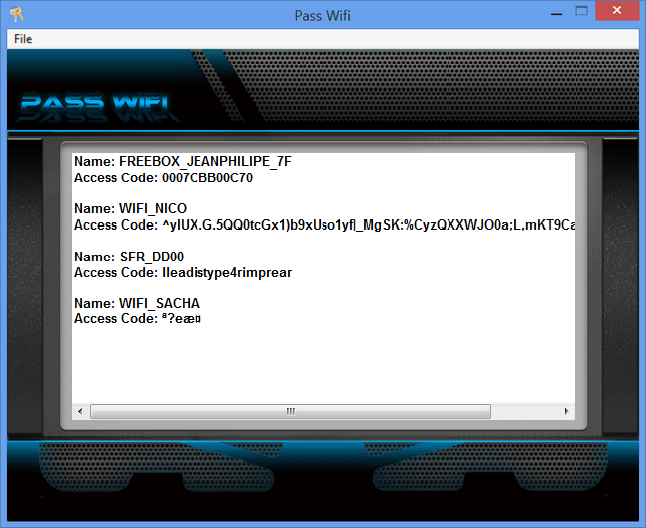
In other words it is compatible with Windows. It is possible to use it therefore on a computer, a smartphone or a tablet. It allows its user to recover the information of the database of WiFi network connections and then provide the password necessary to access it. Its main advantage resides in the fact that it only needs to be installed on your own terminal. Which prevents you from breaking your head over the method of using it. Indeed, you must quite simply download it. Then launch the WiFi network search. Once the search is executed, the computer program takes care itself of decrypting the password. The software in question here has already proved itself. Used by thousands of people around the world, its use is guaranteed or reimbursed.
Tip 2: Use a Keylogger
A Keylogger is a computer program whose main functionality is to be able to copy everything that the individual writes on their keyboard from the instant that their terminal is trapped by it. In other words it is a spyware.

But to use it effectively, it must be installed on the smartphone the computer or the tablet of the individual who regularly connects to the WiFi that you target. In this way when they enter the password of this WiFi, you will then be able to copy this login identifier. However, in this method, there is a catch. Indeed, for this to work correctly, it will obviously be necessary that the device you have contaminated with the keystroke recorder has not already saved the password in question.
Tip 3: The default password
This seems harmless as a method, but one can in a certain way try this move and have the upper hand.
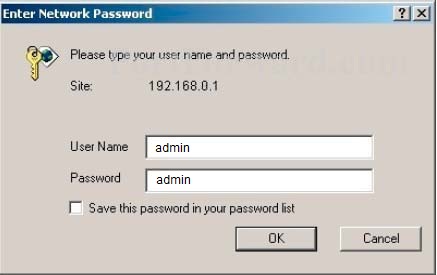
Indeed, many users of this kind of service have the bad habit of always keeping active the default password that was attributed to them by the access provider during the installation of the modem. You just need to know what the access provider is as well as the hardware used, to know also easily the default password. In several situations this technique works. It does not require real deployments. However, it is something rather hazardous because the chances of success rest only on assumptions.
Now access an unlimited number of passwords!